Five Signals That Insurtech Is Ready for Consolidation
Consolidation in insurtech has been “coming soon” for long enough that it stopped sounding like a prediction and started sounding like background noise. We have sat in enough rooms with Founders and Funders across insurance and wealth tech to say this: the signals right now are different from the ones that got ignored the last few times.
Here are five we are watching closely.
01
Capital scarcity is forcing exits, not just fundraises
For years, a Founder who could not raise the next round simply waited for the market to turn. That patience is thinner now. More Founders are fielding acquisition conversations not because they want to sell, but because the alternative is running out of runway with no clean path to the next check.
That shift, from raising to selling as the default next move, is new.
02
Distribution is consolidating faster than product
There are fewer paths to the end customer than there used to be, and the paths that remain are controlled by fewer players.
A great product with no distribution deal is worth less than it was three years ago. Founders who built assuming they could go direct are discovering how much that assumption cost them.
03
Feature parity has caught up with differentiation
A lot of point solutions solving the same narrow problem in slightly different ways have reached the point where the differences do not matter to the buyer anymore.
When five vendors can do roughly the same thing, the market usually decides it only needs two or three of them.
04
Operators, not just PE, are actively shopping
The buyers showing up in these conversations are increasingly people who have built and run insurance and wealth tech businesses themselves, not financial buyers looking for a multiple.
That changes the deal conversation. Operator buyers ask different questions, move on different timelines, and often want the founding team to stay and build, not exit and disappear.
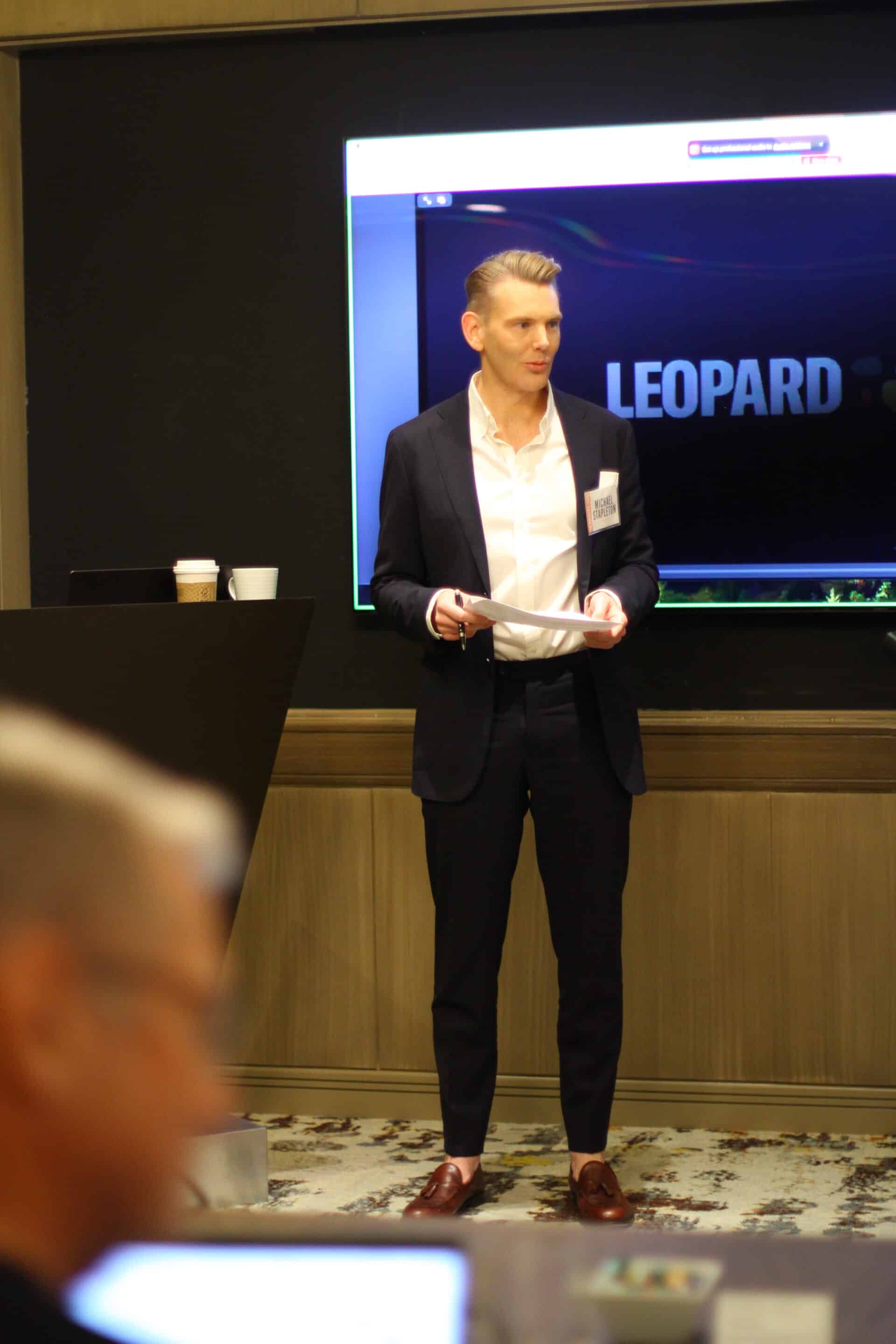
Founder Highlight: Michael Stapleton, Leopard
Michael Stapleton and Leopard are a good example of what that can look like.
Michael presented Leopard at The Founder’s Chair while the company was still early in its growth. Leopard had launched out of The D. E. Shaw Group’s venture studio with a goal of modernizing life insurance and annuity distribution by connecting fragmented data and replacing manual processes with technology.
Just 18 months after launch, Leopard was acquired by Coventry. Michael has been candid that an acquisition was not something he and Co-Founder Matthew Brown expected to be considering that quickly. But the opportunity made sense because it gave the team the ability to keep building, move faster, and make a larger impact with the backing of an organization aligned with where they believed the industry could go.
That distinction matters. Consolidation does not always mean a Founder is ready to walk away or that a buyer is simply purchasing revenue. Sometimes the strategic fit is the reason to do the deal, and the Founder stays in the picture because there is still more to build.
05
Founder fatigue is real, even if Founders will not say so publicly
Nobody wants to be the Founder who admits they are tired. But in private conversations, more Founders are open to a sale than their public posture suggests.
That gap between what Founders say on stage and what they say in the room is one of the clearest signals we track, because those private conversations often start changing before that shift becomes visible in announced deals.
What this means for the room
None of these signals mean insurtech is shrinking. They mean it is maturing into a market with fewer, stronger players and clearer paths to the customer.
That is exactly the kind of environment The Founder’s Chair was built for: a room where Founders and Funders can have the honest version of this conversation before it shows up in a press release.